If protein-forward breakfasts have ever left you chewing through dry disks that taste like penance, these pancakes are your exit. Lemon lifts the flavor, cottage cheese provides richness without heaviness, and a smart balance of flour and eggs gives you the fluff you expect from a diner stack. You get a bright, tender pancake with staying power, not a gym snack in disguise.
I’ve cooked these on home stoves that run hot and finicky induction burners, and I’ve taken them on the road for a rental kitchen weekend where the only measure was “one coffee mug equals about a cup.” They’re forgiving, they scale, and they hold well. There are a handful of levers you can pull to dial texture, sweetness, and protein. I’ll show you how to think about those choices, then walk you through the version that wins in my test notebook most often.
Who these pancakes suit, and why they work
You want an actual breakfast, not a smoothie that vanishes in an hour. You also want your morning to feel clean and bright, not weighed down by syrupy sweetness. Lemon solves that. Cottage cheese does two jobs better than many protein powders: moisture and body. The curds melt into the batter as they heat, so you get pockets of creaminess and a custardy crumb, with enough structure to flip cleanly. A touch of baking powder lifts the batter, while lemon juice and zest keep the flavor focused.
Here’s the thing about protein pancakes, broadly: the reason so many turn rubbery is an overcorrection. Too much egg, too little starch, or a scoop of whey that clumps and drinks the water right out of your batter. The balance that holds here is roughly a 2:1 ratio by volume of flour to cottage cheese, with two eggs binding and a measured amount of liquid to thin. That gives you a batter that flows but doesn’t run, and a finished pancake that stays tender even as it cools.
The base recipe I trust
This makes 8 to 10 small pancakes or 6 medium ones. It feeds two hungry people or three if you have sides. Double it without changes. Triple it only if you’re cooking on two burners, otherwise your early batches will steam in their own warmth while you finish the rest.
Ingredients
- 1 cup (120 g) white whole wheat flour or all-purpose flour 1 teaspoon baking powder 1/4 teaspoon baking soda 1/4 teaspoon fine salt 2 tablespoons granulated sugar or 1 tablespoon honey or maple syrup Zest of 1 large lemon (about 2 packed teaspoons) 3/4 cup (180 g) small-curd cottage cheese, 2 percent or full-fat 2 large eggs 1/2 cup (120 ml) milk of choice, plus 2 to 4 tablespoons more as needed 2 tablespoons fresh lemon juice 1 teaspoon vanilla extract Neutral oil or butter for the pan
Method
- In a medium bowl, whisk the flour, baking powder, baking soda, and salt to eliminate lumps and distribute leaveners. In a separate bowl, whisk the eggs, sugar, lemon zest, cottage cheese, milk, lemon juice, and vanilla until the curds are mostly smoothed but still visible. Aim for a cohesive mixture with some texture. Fold the dry ingredients into the wet with a spatula. Stop when you no longer see dry flour. If it seems thick like cake batter, add milk a tablespoon at a time. You want a pourable but slightly thick batter that settles slowly on the ladle. Rest the batter 5 to 10 minutes while you heat a nonstick skillet or griddle over medium. The rest lets the flour hydrate and the baking powder activate. Lightly oil the hot surface, then ladle 1/4 cup portions. Cook until edges set and the surface shows several small bubbles with a matte sheen, about 2 to 3 minutes. Flip and cook another 1 to 2 minutes until golden and cooked through. Keep finished pancakes warm on a 200°F oven rack while you finish the batch.
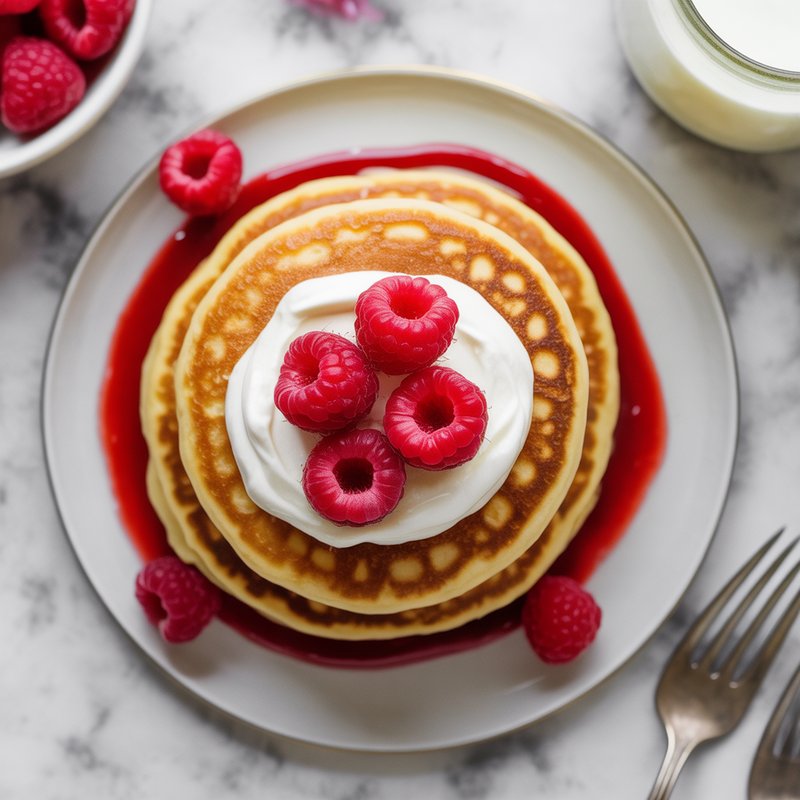
Serve with a squeeze of lemon and a dollop of yogurt, or a quick lemon-vanilla ricotta if you want to lean into the theme. Maple syrup works, but a blueberry compote sings with the citrus.
What makes a lemon pancake taste bright instead of sour
Zest carries the aroma you think of as “lemony,” not juice. Juice brings acidity that helps with lift and balance, but overdo it and you’ll start dissolving gluten strands before they do their job. I’ve tried everything from a half lemon to two full lemons per cup of flour. The sweet spot is one well-zested lemon plus two tablespoons of juice for one cup of flour. That keeps the crumb tender and the scent up front without pushing the batter into curdled territory.
If you only have bottled juice, still use it for the acid, but double down on vanilla and add an optional drop of lemon extract to get the aroma back. If you have Meyer lemons, they are softer and sweeter; use the zest of one and three tablespoons juice, then cut the sugar by a teaspoon so the pancake doesn’t veer into dessert.
The protein math without the marketing
A single batch lands roughly in the 30 to 45 gram range of https://cottagecheeserecipes.co/ protein depending on your cottage cheese and milk. Split into two generous portions, you’re looking at 15 to low 20s per plate, which is a sensible target for a first meal if you’re active. If you need to push higher without wrecking texture, you can:
- Swap half the milk for 1/4 cup plain Greek yogurt and 1/4 cup milk. This adds a gentle tang and 5 to 8 grams protein to the batch. Fold in 2 tablespoons of finely milled almond flour and subtract 2 tablespoons of wheat flour. This shifts mouthfeel slightly, adds fat and a small protein bump, and helps with moisture retention if reheating. Add a scoop, around 20 to 25 g, of unflavored whey isolate; then add 2 to 4 tablespoons more milk and a pinch more sugar. This works, but you must mix gently and cook slightly lower and slower. Whey sets fast and can toughen if rushed.
If you prefer to avoid whey entirely, stick with the cottage cheese plus yogurt move. Casein-rich dairy proteins hold texture better under heat.
The common mistakes and how to dodge them
This batter looks deceptively simple, yet there are a few places people get burned.
First, overmixing. If you whisk and whisk, trying to smooth every curd and lump, you’ll build gluten and the crumb will chew back. Mix with a spatula and accept a few tiny lumps. The curds melt, the lumps relax.
Second, heat that’s too high. Protein browns quickly. If your first pancake darkens faster than it sets, your skillet is too hot. Aim for a medium heat that allows that first side to cook in about 2 to 3 minutes. If you need numbers, you’re around a 350 to 375°F griddle surface. Home stovetops vary, so your eyes and nose matter more than the knob position.
Third, the acid trap. Extra lemon juice sounds good until it breaks the batter. If you hear sizzle when you add juice to the dairy mixture, or you see visible curdling beyond cottage curds, you went heavy on acid or added acid to milk that was already cold and stiff. Keep the juice to 2 tablespoons per cup of flour and whisk promptly.
Fourth, the wrong cottage cheese. Large curd with a watery base can create pockets that cook unevenly. Small curd, 2 percent or full-fat, gives you the best shot at an even crumb. If large curd is your only option, pulse it a few times in a food processor, or mash with a fork with a tablespoon of milk to loosen.
Fifth, sweetener balance. Lemon makes sugar feel less sweet. If you cut sugar to zero, the flavor can read flat, even if you plan to use syrup. I rarely go below one tablespoon sugar in the batter. That small amount rounds the lemon without tipping into cake.
A short, real scenario from service
A friend once asked me to cook breakfast for a trail crew at a small mountain lodge. They had exactly one good skillet, a wobbly electric griddle, and two bags of cottage cheese with no label on the fat percentage. The crew needed out the door in 40 minutes, and they needed fuel.
We split the batter into two bowls to keep things moving. The first batch ran too thick on the electric and browned too fast on the skillet. We loosened with a splash more milk, cut the heat a notch, and added a teaspoon more baking powder to the second bowl because the room was cold and the batter had sat. The adjustment hit that tender middle. The pancakes held heat in foil without sweating, and the lemon made them taste oddly fresh in the thin, chilly air. The crew asked for the recipe as they laced boots. The lesson wasn’t heroic, just honest: watch your first pancake like a pilot watching instruments on takeoff, then adjust. Pancakes are forgiving if you respond early.
Flour choices and how the crumb shifts
All-purpose flour is the straightest path to fluff. White whole wheat works beautifully if you give the batter an extra three to five minutes of rest, which allows bran to hydrate. If you go full whole wheat, expect a nuttier flavor and a bit more chew. Reduce the flour by one tablespoon and add one more tablespoon milk to offset thirstier bran.
Oat flour is tempting for gluten-free needs, and it can work with one change: add 1/2 teaspoon of psyllium husk powder or 3/4 teaspoon xanthan gum to provide structure, then let the batter rest 10 to 12 minutes. You’ll lose some lift, but the lemon and cottage cheese keep the pancakes tender. Brown rice flour is less reliable here, yielding a sandier bite unless blended with tapioca starch. If gluten-free is a medical need, start with a 1:1 gluten-free flour blend from a brand you trust, then adjust liquid by feel.
Pan, fat, and the flip
Nonstick is the least fussy tool. Cast iron brings beautiful browning but amplifies any heat mistake. If you use cast iron, preheat longer than you think, at least 6 to 8 minutes, then drop heat slightly before the first ladle. Stainless is possible if you treat pancakes like crepes and accept a little sticking on the first round while a fond forms.
For fat, I rotate. A thin film of neutral oil gives the most even browning. Butter tastes better but burns quicker with these sugars and milk solids, especially on the second and third rounds. If butter is non-negotiable, start with oil for the pan and dot a small piece of butter near each pancake right after ladling. It perfumes and browns the edges without scorching the whole surface.
As for flipping, wait for cues. The edges should look set, not wet. Bubbles should rise and hold a second before popping. Slide the spatula in confidently, lift, and turn your wrist. If the pancake tears, you either turned too early or your batter is too thin. Give the next one another 30 seconds and consider a spoonful more flour if the batter spreads too far.
Make-ahead, leftover strategy, and reheating
The batter doesn’t hold well overnight due to chemical leaveners losing vigor and the lemon continuing to react. If you must prep ahead, whisk dry and wet separately, mix in the morning, then rest 5 to 10 minutes.
Cooked pancakes store beautifully. Cool completely on a rack, then stack with a tiny square of parchment between each. Wrap tightly and refrigerate up to 3 days or freeze up to 2 months. Reheat from fridge in a toaster on low two passes, or from frozen on low three passes. Microwaves work in a pinch at 50 percent power for 40 to 60 seconds for two pancakes, but you’ll lose the edges. A dry skillet over medium for 2 minutes a side revives texture best.
If you routinely cook for one, make the full batch and freeze in stacks of two. Lemon flavor holds up better than berry pancakes on a reheat day, and you’ll thank your earlier self when a meeting runs long.
Variations that still respect the lemon
Blueberry is the obvious partner, and it offers a small technical wrinkle. Blueberries burst and steam, which can create craters if you mix them into the bowl wholesale. I prefer to scatter berries onto each pancake after you ladle batter onto the griddle. Press gently with a finger so each berry sinks a hair into the surface. Frozen berries are fine; do not thaw, and dust them with a teaspoon of flour to limit streaking.
Poppy seed adds a pleasing crackle and turns this into a brunch piece. One tablespoon per batch is enough. If you add poppy seeds, consider a lemon-yogurt drizzle instead of syrup to stay on theme.
If you want a savory option, cut the sugar to one teaspoon, skip vanilla, and add a tablespoon of finely chopped chives and a grind of black pepper. Serve with smoked salmon and a spoon of crème fraîche. Lemon holds, and the cottage cheese links the flavors.
For a higher-fiber morning, replace two tablespoons of the flour with ground flaxseed. You’ll need an extra two tablespoons of milk. The result is slightly heartier without tasting “healthy” in the pejorative sense.
Troubleshooting by symptom
- Pancakes puff nicely but collapse into dense disks on cooling: leavener old or overmixed batter. Check your baking powder date and reduce mixing strokes next time. You can also add a half teaspoon more baking powder if you’re at altitude or your flour is cold and dense. Pale with gummy centers: heat too low or batter too thick. Raise the temperature a notch and add a tablespoon or two of milk to thin. Bitter edge to the lemon: too much pith in the zest or baking soda not balanced by acid. Zest with a microplane, avoid the white layer, and keep to 1/4 teaspoon baking soda with 2 tablespoons lemon juice. Too sour: went heavy on juice or used low-fat, highly acidic dairy across the board. Swap in 2 percent or whole-milk cottage cheese, hold the juice to the measured amount, and increase sugar by a teaspoon. Sticks despite nonstick: residue from prior batches or butter solids burnt on the surface. Wipe the pan with a folded paper towel between rounds and re-oil lightly. If your nonstick is old and dull, lower heat and give it more fat; the pancakes will still brown.
A note on equipment and timing for a crowd
If you’re cooking for six with a single skillet, you’ll fight the clock. Two approaches work well.
First, run a 12-inch nonstick plus a griddle pan that straddles two burners. Get both to temperature, oil both lightly, and feed them from one mixing bowl. Stagger pours by a minute so you’re flipping in rhythm, not chaos.
Second, batch cook early and reheat. Make all pancakes an hour before guests arrive, cool on racks, and hold in a 200°F oven on a sheet tray fitted with a rack. They stay surprisingly fresh for 30 to 45 minutes this way. Just avoid stacking too tight in the oven, or they’ll steam and soften.
If you only have one burner and a Dutch oven, invert the lid over low heat to form a second, small griddle surface. It sounds like a hack, because it is, but it works in a pinch if your lid is smooth and oven-safe.
Ingredient swaps, ranked by impact
The core of this recipe is flour, eggs, cottage cheese, lemon, and a leavener. Everything else flexes. If you need to substitute, here’s the order of swaps I’ve tested, from lowest to highest impact on texture.
- Milk: any unsweetened nut milk, oat milk, or lactose-free milk works. Oat milk browns a little faster due to sugars, so lower heat slightly. Sweetener: maple or honey substitute 1:1 by volume. Honey adds more moisture and browns faster. Reduce heat a notch. Cottage cheese: ricotta can stand in. Use 3/4 cup ricotta and reduce milk by 1 to 2 tablespoons, since ricotta is looser. Texture becomes silkier, slightly less springy. Flour: white whole wheat for all-purpose is fine. Straight whole wheat changes the chew; see the earlier note about reducing flour slightly and adding liquid. Eggs: if you’re short one egg, add 2 tablespoons Greek yogurt and 1 teaspoon neutral oil. Vegan egg replacements work technically but push the pancake into a different category. Lemon and cottage cheese do heavy lifting here; taking eggs away shifts the structure more than most people want for this style.
A quick lemon yogurt topping that matches the stack
Stir 1/2 cup plain Greek yogurt with 1 teaspoon honey, 1 teaspoon lemon zest, and a pinch of salt. If it’s too thick, loosen with a teaspoon of milk. The salt matters; it wakes up the lemon and keeps the topping from reading as one-note tangy. Spoon over a short stack and finish with a dusting of zest or a few crushed pistachios if you want texture.
If you prefer syrup, warm it with a strip of lemon peel. Combine 1/2 cup maple syrup and two strips of lemon peel in a small pan. Heat until steaming, then let it sit 10 minutes off the heat. Pull the peel before serving.
Why these pancakes are weeknight-friendly, not just weekend theater
Pancakes signal leisure, but this batter earns a spot on a Tuesday night when you need dinner that doesn’t spark a sink full of dishes. Two bowls, one skillet, a 20-minute total process if you move with intent. Cleanup is simple, the skills are basic, and the margin for error is wider than you think. Protein makes the meal feel complete without frying bacon or scrambling six eggs. Lemon keeps the plate lively.
If you cook for kids, consider a half-batch with blueberries on a school morning after practice. The pancakes reheat as well as waffles and don’t ask you to plug in anything. If you cook for yourself, make the full batch Sunday and freeze in pairs. A minute in the toaster and you have a controlled, balanced breakfast that doesn’t taste like compromise.
The last few inches to excellence
Small choices stack up. Zest with intention, not in a hurry, rotating the lemon so you avoid the bitter pith. Measure your baking powder with a leveled spoon, or weigh it, since old baking powder or a heavy hand is the stealth culprit behind off flavors. Rest the batter long enough to hydrate but not so long the leavener peaks in the bowl. Wipe the pan between rounds if you see residue. Taste the first pancake without toppings and adjust the batter with a pinch more salt, a teaspoon of sugar, or a splash of milk if the texture feels off. It’s easier to tune batch two than to wish you had.
When a recipe feels easy and delivers consistently, it starts to live in your hands, not on the page. These lemon cottage cheese protein pancakes settle into that category fast. You’ll feel the batter thicken as it rests, hear the right level of sizzle, and recognize the point at which the bubbles signal a clean flip. That’s craft, learned a few minutes at a time at your stove. And if breakfast can be both bright and substantial, we’ve done our job.